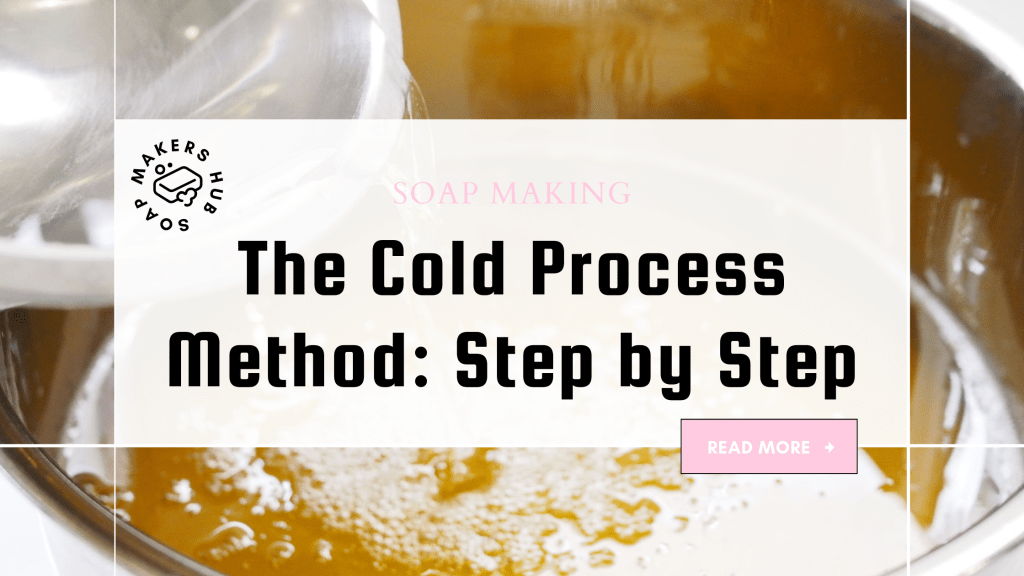
A Practical Guide to Making Traditional Soap From Scratch
The cold process method is the most traditional way to make soap using natural oils or fats. It relies on a chemical reaction called saponification and allows the maker full control over ingredients, formulation, and final qualities of the bar.
Below is a clear, step-by-step overview of how cold process soap is made, from preparation to curing.
Step 1: Formulating the Recipe
Before any soap is made, the recipe must be carefully calculated.
A cold process soap recipe is a balance of:
- Oils and fats (each chosen for specific properties)
- Sodium hydroxide (lye)
- Water (or another liquid)
Every oil requires a specific amount of lye to turn it into soap. For this reason, recipes should always be calculated using a reliable soap calculator, not guessed or estimated.
This step determines:
- How cleansing or mild the soap will be
- Lather quality
- Hardness and longevity of the bar
Good soap starts with good formulation.
Step 2: Preparing the Workspace Safely
Cold process soap making involves working with sodium hydroxide, which is caustic before saponification is complete.
Before starting:
- Work in a well-ventilated area
- Wear gloves and eye protection
- Use heat-safe containers and utensils
- Keep pets and children away from the workspace
Respect for safety is part of respecting the craft.
Step 3: Mixing the Lye Solution
The lye solution is made by slowly adding sodium hydroxide to water (never the other way around).
When lye is added to water:
- The mixture heats up rapidly
- Fumes are released briefly
- The solution becomes clear as it dissolves
The lye solution is then set aside to cool to a suitable working temperature.
Step 4: Preparing the Oils and Fats
While the lye solution cools, the oils and fats are prepared.
This may involve:
- Melting solid fats or butters
- Combining liquid oils
- Allowing the mixture to cool slightly
The goal is for the oils and the lye solution to be within a similar temperature range before mixing, which helps ensure a smooth and even reaction.
Step 5: Combining Oils and Lye (Emulsification)
Once both mixtures are ready, the lye solution is slowly poured into the oils.
Using gentle stirring or a stick blender:
- The mixture thickens gradually
- The oils and lye begin to emulsify
- Saponification starts to occur
This stage is often referred to as reaching trace — the point at which the mixture is thick enough to leave a faint trail on the surface.
Step 6: Adding Extras (Optional)
Once trace is reached, additional ingredients can be added, such as:
- Essential oils
- Natural colourants
- Clays or botanical powders
- Exfoliants or additives
These are added carefully and mixed evenly before the soap thickens further.
Step 7: Pouring Into Moulds
The soap batter is poured into moulds and levelled.
At this stage:
- The soap is still reactive
- Saponification continues inside the mould
- Heat may build naturally within the soap
The mould is often covered and left undisturbed to allow the soap to fully set.
Step 8: Unmoulding and Cutting
After 24–48 hours:
- The soap becomes firm enough to remove from the mould
- Large blocks are cut into individual bars
Although the soap now looks finished, it is not yet ready to use.
Step 9: Curing the Soap
Curing is one of the most important — and often overlooked — steps.
During curing:
- Excess water evaporates
- The soap hardens further
- The bar becomes milder and longer-lasting
Cold process soap typically cures for 4–6 weeks, sometimes longer depending on formulation.
This waiting period is what transforms fresh soap into a balanced, finished bar.
Step 10: Finished Soap
Once cured, the soap is:
- Fully saponified
- Mild and stable
- Ready for use or sale (where permitted)
A well-made cold process soap is the result of formulation, patience, and process, not shortcuts.
Why the Cold Process Method Matters
Cold process soap making allows:
- Full control over ingredients
- Retention of naturally occurring glycerin
- Customisation of hardness, lather, and skin feel
- A deeper understanding of how soap truly works
It is a method rooted in tradition, chemistry, and intentional craft.


 The Soap Makers Hub®
Leave a comment