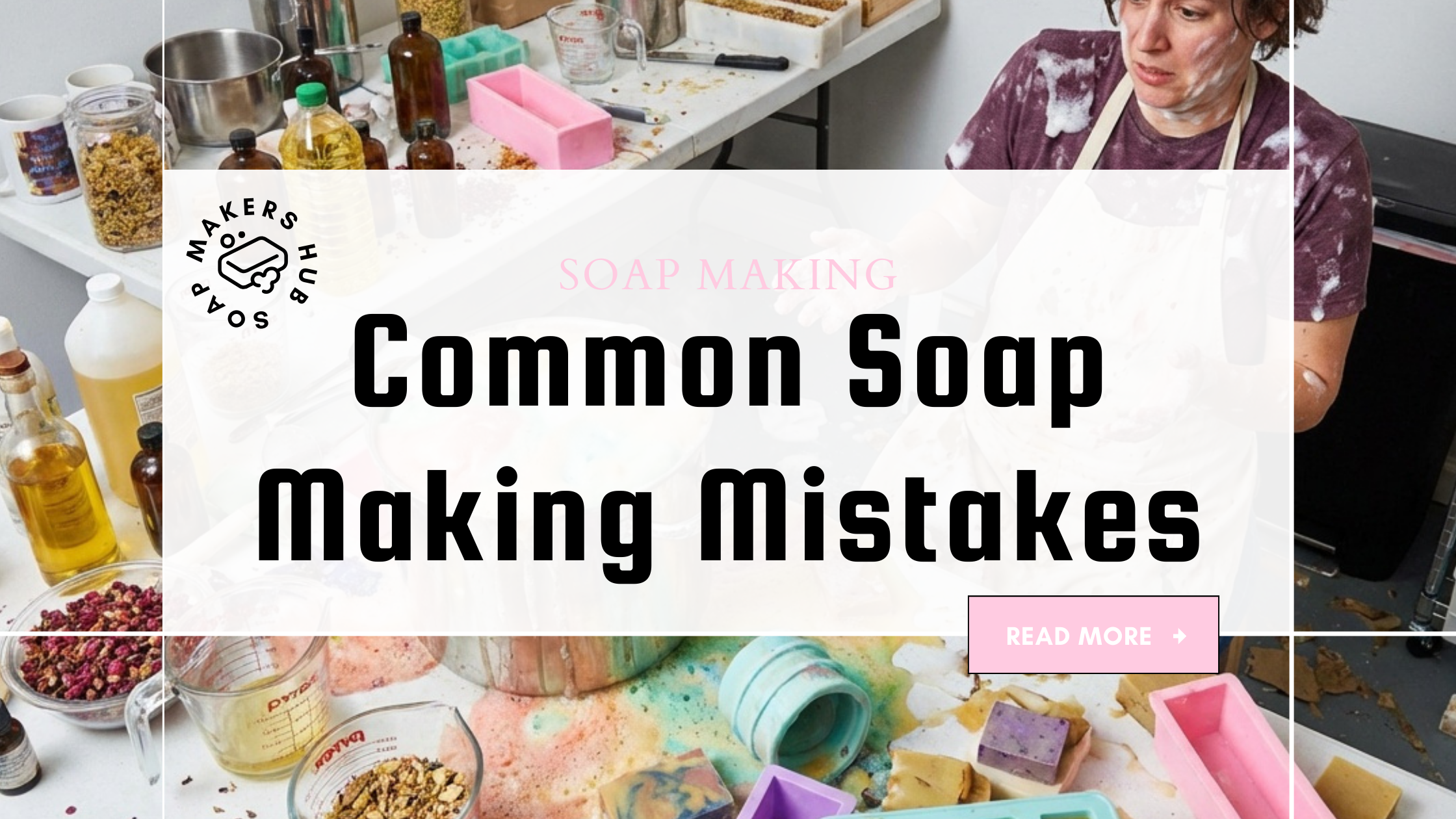
Practical Lessons Every Soap Maker Learns (Often the Hard Way)
Soap making is a craft built on practice, patience, and learning from mistakes. Every experienced soap maker has made them — often more than once. The difference between frustration and progress is understanding why things go wrong and knowing how to prevent them next time.
This guide covers the most common mistakes in cold process soap making and how to avoid them.
1️⃣ Rushing the Process
One of the biggest beginner mistakes is rushing — rushing trace, rushing unmoulding, or rushing cure time.
Why it causes problems:
- Soap may be too soft or crumbly
- Bars don’t last in use
- Harsh or unbalanced feel
How to avoid it:
- Allow the batter to emulsify properly
- Leave soap in the mould for a full 24–48 hours
- Cure soap for at least 4–6 weeks
Soap improves with time — patience is part of the process.
2️⃣ Not Using a Soap Calculator
Guessing lye amounts or copying recipes without understanding them is risky.
Why it causes problems:
- Lye-heavy soap (unsafe)
- Soft or oily bars
- Inconsistent results
How to avoid it:
- Always run recipes through a reliable soap calculator
- Recalculate every recipe change
- Record your exact measurements
Formulation is chemistry, not estimation.
3️⃣ Using Too Many Oils “Just Because”
More oils do not equal better soap.
Why it causes problems:
- Muddy formulation
- Hard-to-troubleshoot results
- No clear oil purpose
How to avoid it:
- Use 3–5 oils per recipe
- Choose each oil for a reason
- Learn what each oil contributes
Simple formulas teach more than complex ones.
4️⃣ Overusing Coconut Oil
Coconut oil is popular — and often overused.
Why it causes problems:
- Soap feels drying
- Strips natural oils from skin
How to avoid it:
- Keep coconut oil around 15–25%
- Balance with conditioning oils
- Use appropriate superfat levels
Cleansing needs balance.
5️⃣ Adding Too Much Essential Oil
More scent does not mean better soap.
Why it causes problems:
- Skin irritation
- Seizing or acceleration
- Failed safety assessments
How to avoid it:
- Always calculate safe usage rates
- Use anchoring oils instead of more EO
- Test blends in small batches
Safe soap is non-negotiable.
6️⃣ Ignoring How Ingredients Behave at Trace
Some ingredients affect soap batter significantly.
Why it causes problems:
- Seizing
- Ricing
- Uneven colour or scent
Common culprits:
- Certain essential oils
- Clays added dry
- Sugars and honey
How to avoid it:
- Test unfamiliar ingredients alone
- Pre-disperse additives
- Add essential oils at light trace
7️⃣ Expecting Colour to Stay the Same
Natural colourants change.
Why it causes problems:
- Disappointment
- Inconsistent results
How to avoid it:
- Expect colour shift
- Test small batches
- Record results after cure
Soap colour develops over time, not instantly.
8️⃣ Skipping Documentation
Not writing things down guarantees repeated mistakes.
Why it causes problems:
- No way to recreate successes
- No understanding of failures
How to avoid it:
- Use a testing log worksheet
- Record every batch
- Change one variable at a time
Documentation is a skill — not busywork.
9️⃣ Selling Before Understanding Legal Requirements
This mistake can be costly.
Why it causes problems:
- Legal issues
- Product recalls
- Loss of trust
How to avoid it:
- Learn cosmetic regulations early
- Get safety assessments before selling
- Label correctly from day one
Professionalism protects your business.
Final Thoughts
Mistakes are not failures — they are part of learning the craft. The goal is not to avoid mistakes entirely, but to understand them and reduce repetition.
Soap making rewards patience, intention, and curiosity. Every well-made bar is the result of lessons learned — often quietly, over time.


 The Soap Makers Hub®
Leave a comment