How to Create Balanced, Safe, and Long-Lasting Scents
Scent is one of the most expressive parts of soap making — but it’s also one of the areas where mistakes are most commonly made. Essential oils behave very differently in soap than they do in candles, perfumes, or skincare, and understanding this is key to creating blends that are balanced, stable, and safe.
This guide explains how essential oil blending works specifically for cold process soap.
Essential Oils in Soap: What to Know First
When essential oils are added to cold process soap, they are exposed to:
- A highly alkaline environment
- Heat from saponification
- Weeks of curing time
Because of this, not all essential oils:
- Smell the same after curing
- Last equally well
- Behave predictably at trace
Blending for soap is about structure and restraint, not just creativity.
Understanding Scent Notes
Essential oils are often grouped into top, middle, and base notes, based on how quickly they evaporate and how long they last.
Top Notes
- Light, fresh, fast-fading
- Provide initial impact
Examples:
- Citrus oils (orange, lemon, bergamot)
- Eucalyptus
- Peppermint
These often fade quickly in soap if not anchored.
Middle Notes
- Rounded, balancing
- Form the body of the blend
Examples:
- Lavender
- Rosemary
- Geranium
- Clary sage
Middle notes help link top and base notes together.
Base Notes
- Deep, grounding, long-lasting
- Anchor the blend
Examples:
- Patchouli
- Vetiver
- Cedarwood
- Frankincense
Base notes are essential for scent longevity in soap.
A Simple Blending Framework for Soap
A good starting point for soap blends is:
- 30% Top notes
- 50% Middle notes
- 20% Base notes
This structure helps create a scent that:
- Smells good initially
- Survives cure
- Smells balanced in use
This is a guideline, not a rule — but it’s a reliable place to start.
Choosing Essential Oils That Perform Well in Soap
Some essential oils are known for better longevity in soap.
Generally strong performers:
- Patchouli
- Cedarwood
- Frankincense
- Lavender (true lavender)
- Litsea cubeba
More volatile oils (often fade):
- Lemon
- Sweet orange
- Grapefruit
- Lime (distilled)
Volatile oils can still be used, but they benefit from being paired with strong base notes.
Safe Usage Rates Matter
Essential oils must always be used within cosmetic safety limits.
Important considerations:
- Each oil has a maximum dermal limit
- Limits vary by oil and product type
- Soap has different limits than leave-on products
Never guess EO usage. Always calculate based on:
- Safety guidance from reliable sources
- Total oil weight
- Product type (rinse-off)
When to Add Essential Oils
Essential oils are typically added:
- At light to medium trace
- After colourants are dispersed
- Just before pouring
Some essential oils can:
- Accelerate trace
- Cause ricing
- Discolour soap
Testing new blends in small batches is essential.
Common Beginner Mistakes
- Using too many oils in one blend
- Overloading citrus oils without anchors
- Ignoring safety limits
- Assuming candle or diffuser blends work in soap
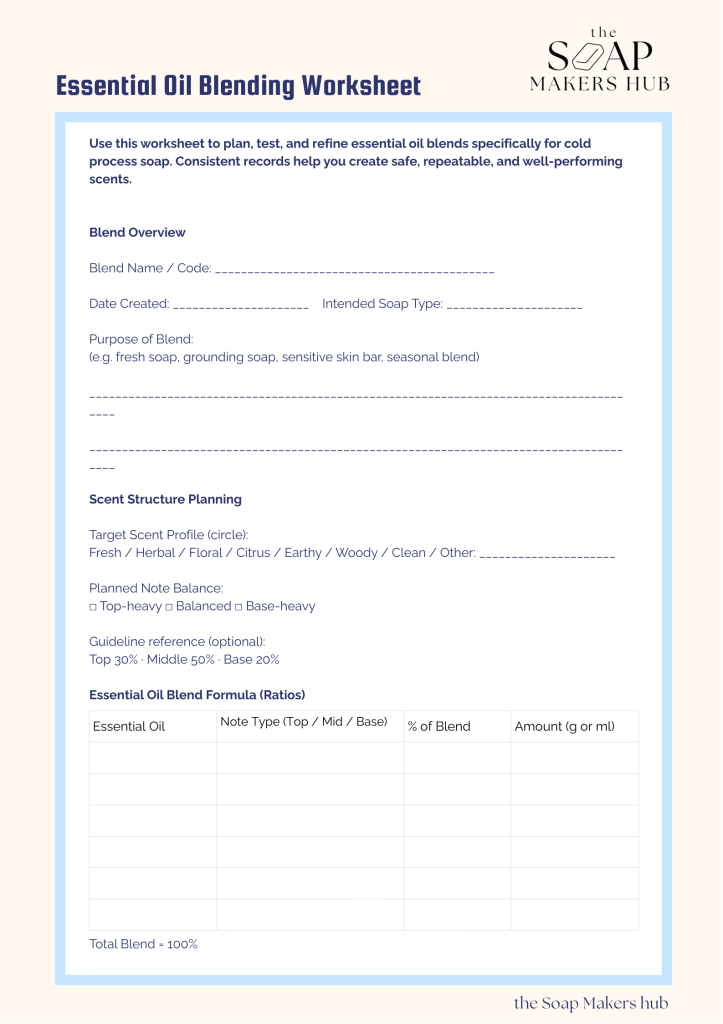
- Not recording blend ratios
Good blends are repeatable blends.
Testing and Recording Your Blends
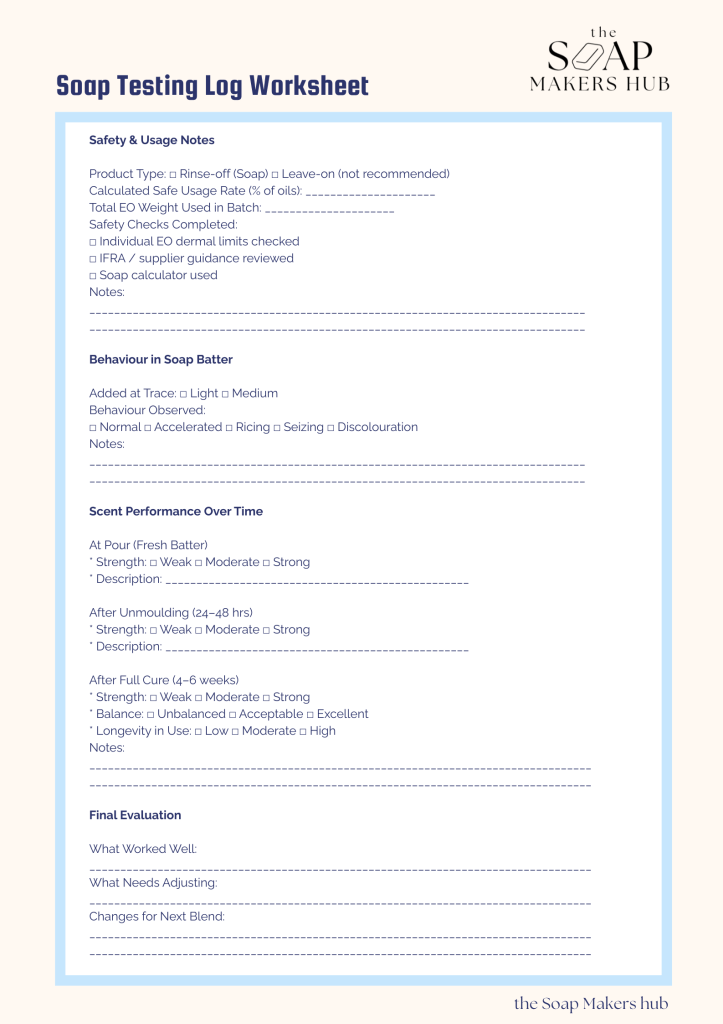
Keep detailed notes on:
- Blend ratios
- Behaviour at trace
- Scent strength after cure
- Changes over time
Blending improves through testing and documentation, not intuition alone.
Final Thoughts
Essential oil blending for soap is a balance of creativity, chemistry, and restraint. The most successful soap scents are those designed to withstand the soap making process — not fight against it.
When blended thoughtfully, essential oils can transform a simple bar of soap into a considered, lasting experience.
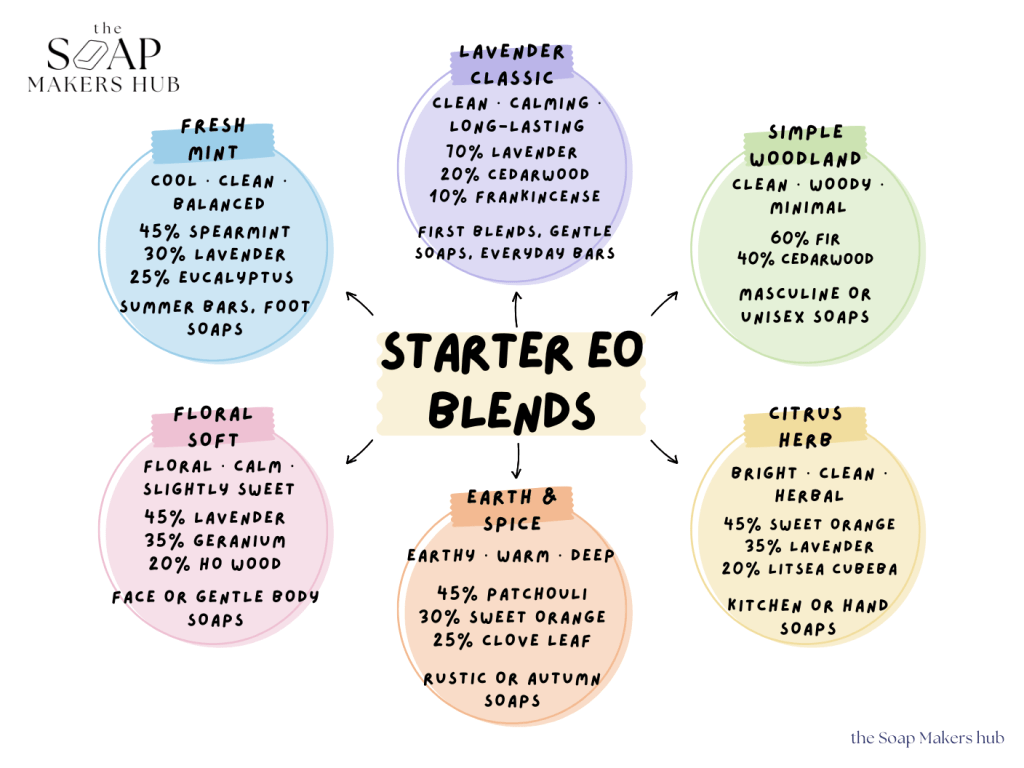
Download our Free Essential Oil Blending Worksheet Here
Coming Up Next at The Soap Makers Hub
We’ll cover:
Building a signature soap scent
Essential oils that accelerate trace
How to anchor citrus scents naturally
Using essential oils vs fragrance oils



 The Soap Makers Hub®
Leave a comment