Building a Well-Formulated Bar, Not Just a Recipe
One of the most important skills in soap making is learning how to choose and balance oils. Oils are not interchangeable, and a good soap recipe is less about following trends and more about understanding what each oil contributes to the final bar.
When oils are balanced correctly, soap cleans effectively without being harsh, lasts longer, and feels better on the skin.
Why Oil Balance Matters
Each oil or fat used in soap contributes specific properties, such as:
- Cleansing power
- Hardness
- Conditioning
- Lather quality
- Longevity
Using too much of one oil can result in soap that is:
- Drying
- Soft or crumbly
- Slimy
- Short-lived
- Poor in lather
Balancing oils allows you to design soap intentionally, rather than relying on guesswork.
The Main Oil Categories in Soap Making
Most soap recipes include oils from several functional categories. Understanding these categories makes formulation far easier.
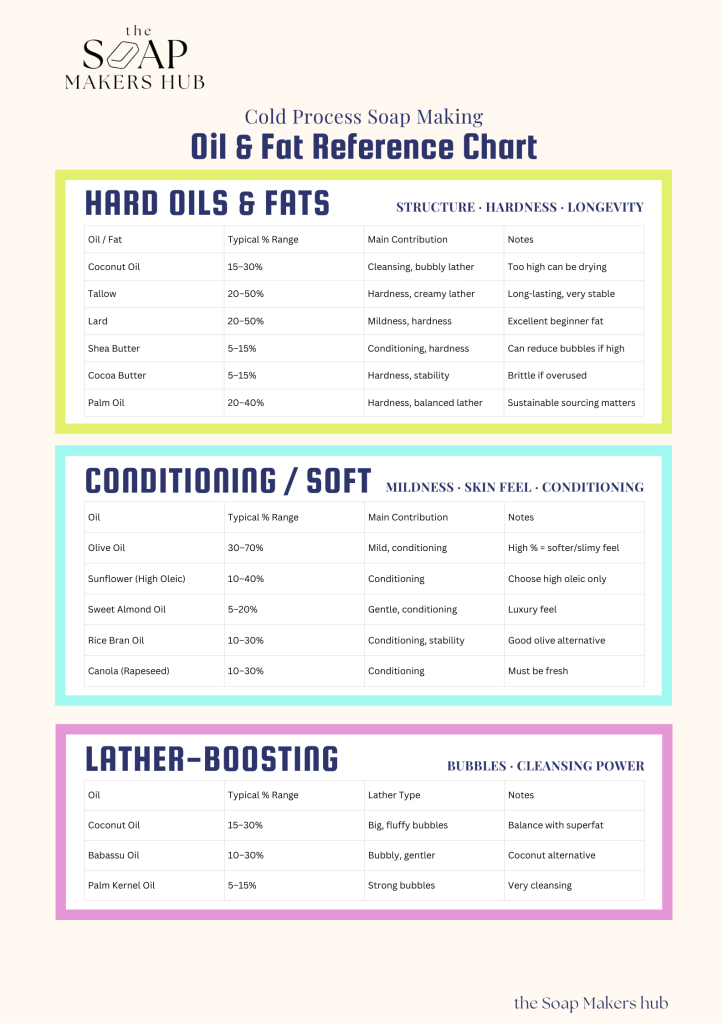
1️⃣ Hard Oils & Fats (Structure & Longevity)
These oils and fats help create a firm bar that lasts well in use.
Examples include:
- Coconut oil
- Palm oil (or palm-free alternatives)
- Tallow or lard
- Shea butter
- Cocoa butter
Typical usage range: 20–40% of the recipe
Too much can make soap brittle or overly cleansing; too little can result in soft bars.
2️⃣ Soft & Conditioning Oils (Mildness & Skin Feel)
These oils contribute conditioning properties and gentle cleansing.
Examples include:
- Olive oil
- Sunflower oil
- Sweet almond oil
- Rice bran oil
Typical usage range: 30–60%
Olive oil is often used as a primary oil, but on its own it can create soap that feels slimy or slow to lather — balance is key.
3️⃣ Lather-Boosting Oils (Cleansing & Bubbles)
These oils help create bubbly or fluffy lather.
Examples include:
- Coconut oil
- Babassu oil
- Palm kernel oil
Typical usage range: 15–30%
Higher percentages increase cleansing power, which may feel drying if not balanced with conditioning oils.
4️⃣ Luxury & Specialty Oils (Enhancement, Not Structure)
These oils are often included in smaller amounts to enhance skin feel or marketing appeal.
Examples include:
- Avocado oil
- Jojoba oil
- Argan oil
Typical usage range: 5–10%
They add value but don’t replace the foundational oils in a recipe.
Understanding Superfatting
Superfatting refers to the percentage of oils left unsaponified in the finished soap.
A typical superfat range:
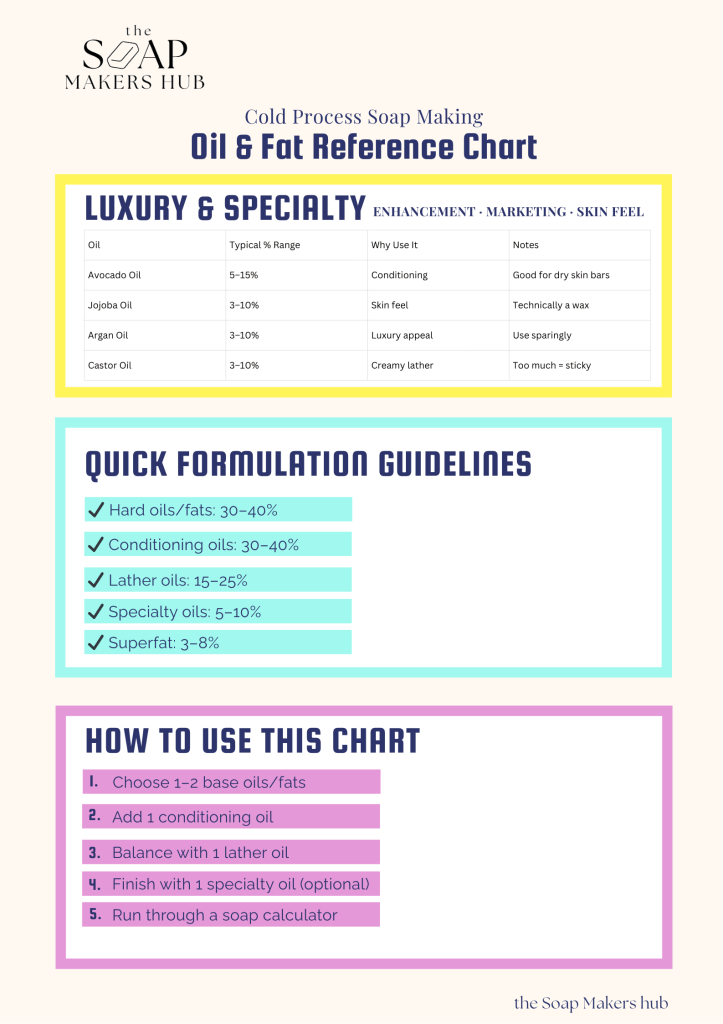
- 3–8% for most cold process soaps
Higher superfats can:
- Increase conditioning
- Reduce cleansing
- Shorten shelf life if excessive
Superfat should support the oil balance, not compensate for a poorly structured recipe.
A Simple Balanced Recipe Framework
While every soap maker develops their own preferences, many balanced recipes roughly follow this structure:
- 30–40% hard oils/fats
- 30–40% conditioning oils
- 15–25% lather-boosting oils
- 5–10% specialty oils
This framework creates a bar that is:
- Firm
- Mild
- Long-lasting
- Pleasant to use
Avoiding Common Beginner Mistakes
Some common formulation issues include:
- Using too many oils “just because”
- Overloading recipes with expensive oils
- Using very high coconut oil percentages without balancing
- Copying recipes without understanding why they work
Good soap formulation is about intention, not complexity.
Testing and Adjusting Your Recipes
Every oil behaves slightly differently depending on:
- Your water content
- Cure time
- Additives used
- Personal preference
Small test batches allow you to:
- Adjust percentages
- Fine-tune lather
- Improve hardness and feel
- Learn how oils behave in your hands
Testing is where real learning happens.
Final Thoughts
Learning how to choose and balance oils is what separates a soap maker from a recipe follower.
Once you understand oil roles, you can:
- Build your own recipes
- Troubleshoot problems
- Create soap that performs consistently
Balanced soap is intentional soap — and intention is at the heart of traditional craft.
Formulation is learned through testing. Keep notes, adjust slowly, and let cure time do its work.
Oil & Fat Reference Chart
Use this chart as a formulation guide — not a recipe. Percentages are typical ranges, not rules.
Download our Formulation guide free Here
Coming Up Next at The Soap Makers Hub
We’ll explore:
How cure time affects soap quality
Understanding soap calculators
What “trace” really means
Natural colourants and when to use them


 The Soap Makers Hub®
Leave a comment