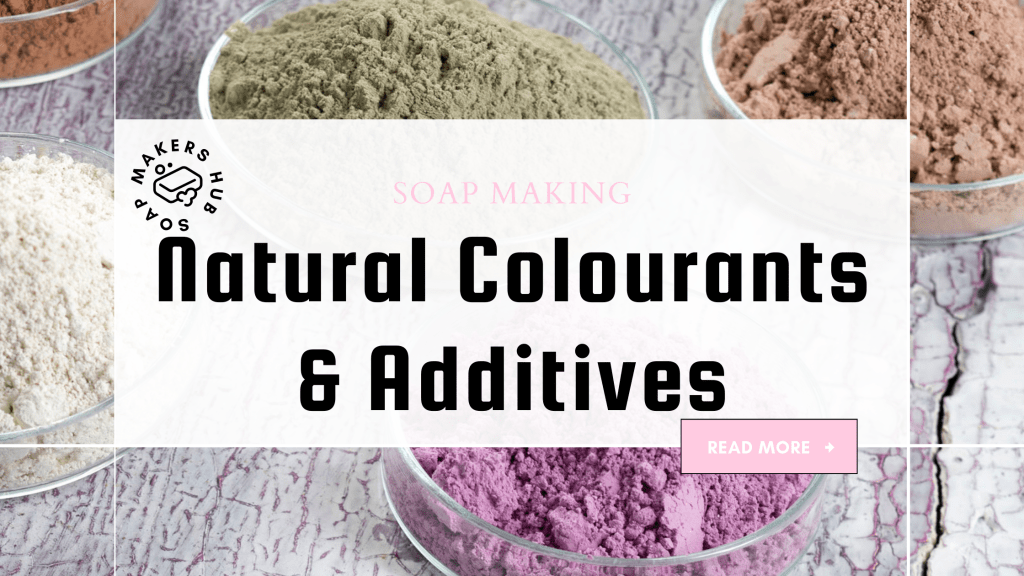
What They Are, How They Work, and When to Use Them
Natural colourants and additives allow soap makers to add interest, character, and functionality to their soap — without relying on synthetic dyes or unnecessary fillers. When used correctly, they can enhance both the appearance and experience of a handmade bar.
Understanding how natural colourants behave in soap is essential, as not all natural materials perform well in the cold process environment.
What Makes a Colourant “Natural”?
In soap making, natural colourants are typically derived from:
- Clays and earth minerals
- Plants, roots, and botanicals
- Natural powders
- Activated charcoal
These colourants work by either dispersing pigment throughout the soap or interacting with the alkaline environment during saponification.
Natural does not always mean predictable — which is why testing matters.
Natural Clays and Earth Colours
Clays are among the most reliable natural colourants for cold process soap.
Common Clays Used in Soap
| Clay | Colour | Notes |
|---|---|---|
| Kaolin (White Clay) | White / Cream | Gentle, suitable for all skin types |
| French Green Clay | Green | Absorptive, earthy tone |
| Rose Clay | Pink | Soft, muted pink |
| Bentonite Clay | Grey / Green | Adds slip, can thicken trace |
| Rhassoul Clay | Beige / Brown | Creamy lather feel |
Usage rate: typically 1–3 teaspoons per kg of oils
Clays also add a silky feel to lather and can slightly increase bar hardness.
Botanical Powders and Plant-Based Colourants
Botanical powders offer beautiful, muted tones but can be less stable than clays.
Examples
- Turmeric – yellow to orange
- Cocoa powder – brown
- Alkanet root – purple (infused in oil)
- Spirulina – green (may fade)
- Madder root – pink to red (infused)
Important:
Many plant powders can:
- Fade over time
- Morph in colour
- Create speckling
Oil infusions often give more even colour than adding dry powders directly.
Activated Charcoal
Activated charcoal is widely used in natural soap making.
- Produces greys, blues to black soap
- Adds visual contrast
- Can slightly increase cleansing feel
Usage rate:
½–1 teaspoon per kg of oils (disperse well to avoid streaking)
Natural Additives (Beyond Colour)
Additives are included for visual interest, exfoliation, or skin feel — not for medical claims.
Common Natural Additives
| Additive | Purpose | Notes |
|---|---|---|
| Oatmeal (colloidal) | Gentle exfoliation | Best finely ground |
| Honey | Humectant | Adds heat to batter |
| Goat’s milk | Creamy feel | Requires careful handling |
| Salt | Hardness | Used in salt bars |
| Sugar | Boosts lather | Dissolve before adding |
Always consider how additives affect trace, heat, and cure.
When to Add Colourants and Additives
Most colourants and additives are added:
- At light to medium trace
- Pre-dispersed in oil or water
- Evenly mixed to avoid clumps
Some ingredients, like clays, are often mixed with oil ahead of time to prevent acceleration.
What to Avoid in Cold Process Soap
Not everything “natural” works in soap.
Avoid:
- Fresh plant matter (can rot)
- Food colouring
- Fresh fruit or vegetable purées (unless properly tested)
- Herbs meant for decoration inside the bar
Natural soap still requires stability and safety.
Testing Is Essential
Natural colourants behave differently depending on:
- Oil blend
- Gel phase
- Cure time
- Exposure to light
Small test batches help you:
- Predict colour outcome
- Adjust usage rates
- Learn how ingredients behave long-term
Documentation is just as important as creativity.
Final Thoughts
Natural colourants and additives allow soap makers to create thoughtful, expressive bars — but restraint and understanding matter more than novelty.
The most successful soaps use:
- Simple, stable colourants
- Additives with purpose
- Consistent formulation
In natural soap making, less is often more!
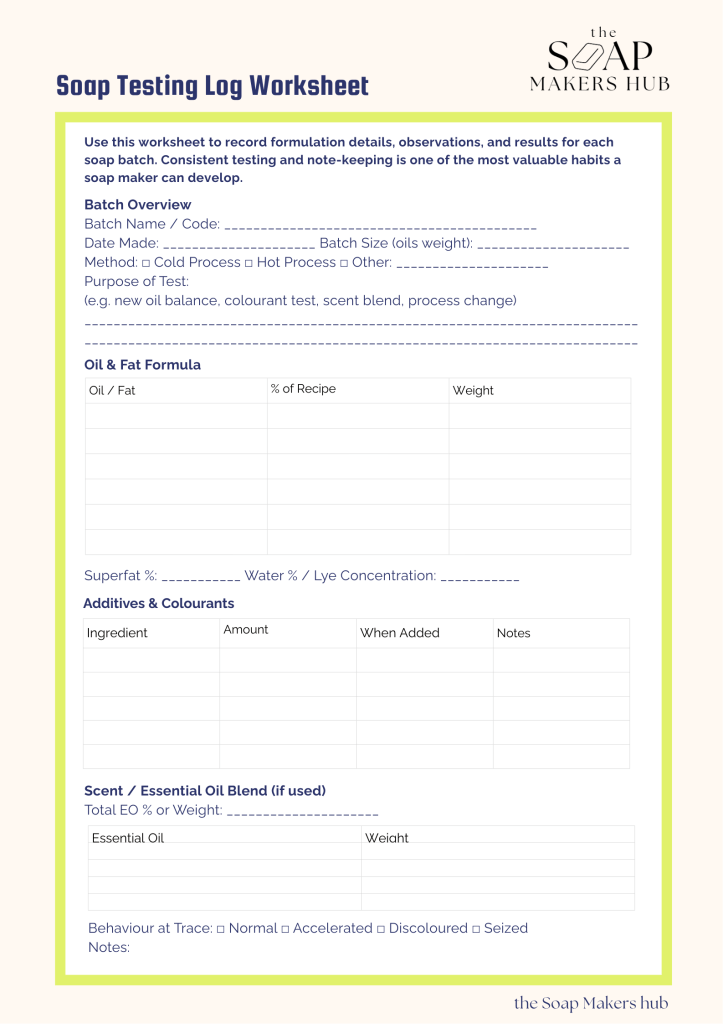
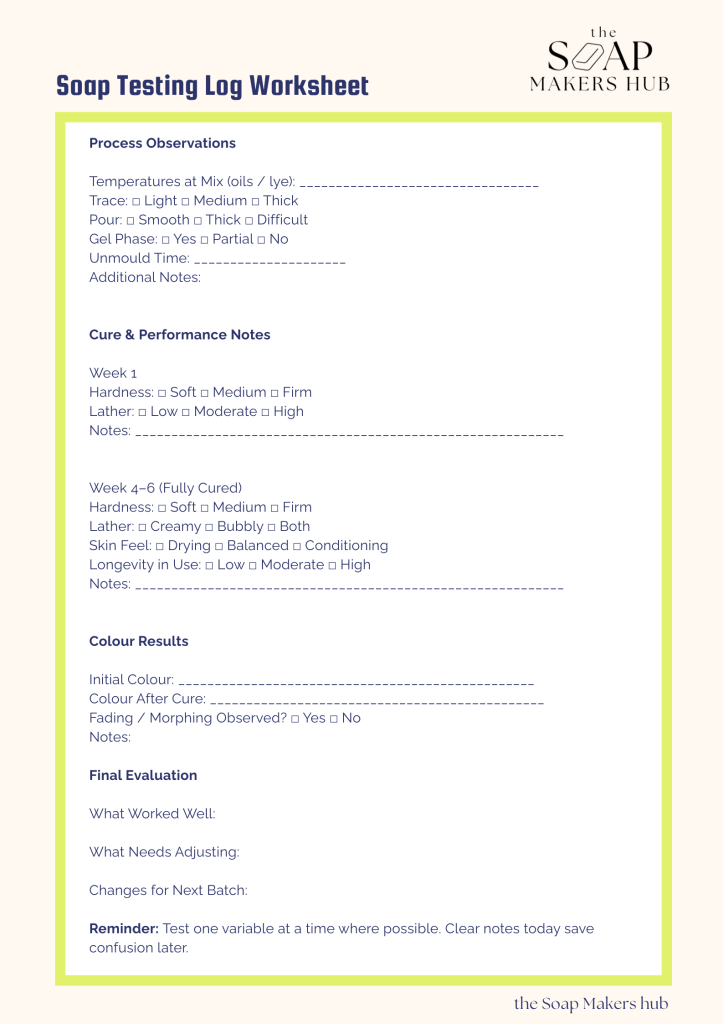
Soap testing log worksheet
It’s structured to support real formulation learning, not just note-taking — oils, additives, scent behaviour, cure observations, and final evaluation are all captured in one place.


 The Soap Makers Hub®
Leave a comment