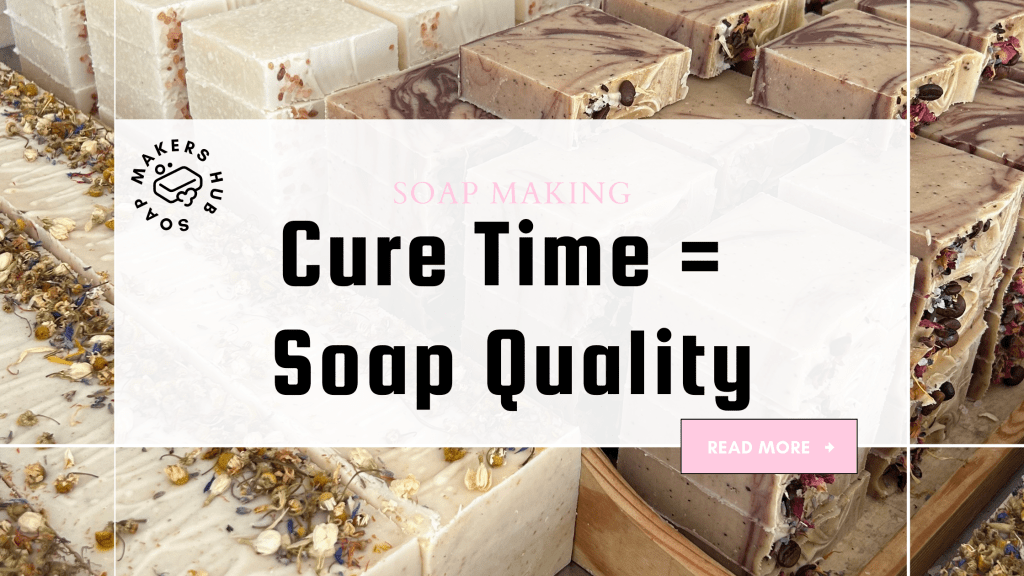
Why Waiting Makes Better Soap
One of the most common misconceptions in soap making is that once a bar looks solid and can be cut, it’s ready to use. In reality, curing is a critical stage in the life of a bar of soap — and it has a direct impact on performance, longevity, and skin feel.
Understanding what happens during cure helps you make better soap and avoid common beginner frustrations.
What Is Cure Time?
Cure time refers to the period after soap is unmoulded and cut, during which it is left to rest in a well-ventilated space. For cold process soap, this period is typically four to six weeks, though some recipes benefit from longer curing.
During cure, the soap continues to change even though it looks finished.
What Happens During Cure?
Water Evaporates
Freshly made soap contains a significant amount of water. Over time, this water slowly evaporates.
As water content decreases:
- Bars become harder
- Soap lasts longer in use
- The bar feels less slimy or soft
This alone makes a noticeable difference to quality.
Soap Structure Continues to Stabilise
Although saponification is largely complete within the first 24–48 hours, the internal structure of the soap continues to stabilise during cure.
This improves:
- Bar firmness
- Lather quality
- Overall performance
Cured soap behaves more predictably than fresh soap.
Mildness Improves Over Time
Fresh soap can feel harsh or drying, especially in high-cleansing formulas.
As the soap cures:
- Excess alkalinity reduces
- The bar becomes gentler to use
- Skin feel improves
This is one of the most important — and most noticeable — benefits of proper curing.
Lather Quality Develops
Cure time affects both the type and stability of lather.
Properly cured soap tends to:
- Lather more easily
- Produce creamier bubbles
- Rinse more cleanly
Many people mistake poor lather for poor formulation when cure time is the real issue.
Why Fresh Soap Is Not Finished Soap
A bar that is:
- Hard enough to cut
- Visually smooth
- Fully saponified
…is not necessarily ready to use.
Skipping or shortening cure time often leads to:
- Soap that dissolves quickly
- Weak or inconsistent lather
- A harsher feel on the skin
Time completes the process.
Does Every Soap Need the Same Cure Time?
No — cure time can vary depending on:
- Water content
- Oil choices
- Bar size
- Storage conditions
High-olive oil soaps, for example, often benefit from longer curing, sometimes eight weeks or more.
However, four to six weeks is a reliable baseline for most cold process recipes.
How to Cure Soap Properly
To cure soap effectively:
- Place bars on open racks or trays
- Allow airflow on all sides
- Turn bars occasionally during cure
- Store in a cool, dry space
- Avoid stacking bars directly on top of each other
Good airflow matters more than warmth.
Common Cure-Related Mistakes
- Using soap too early
- Storing bars in airtight containers
- Assuming “hard” means “cured”
- Not allowing enough airflow
Cure time can’t be rushed — but it can be supported properly.
How Cure Time Affects Selling Soap
If you plan to sell soap, cure time is not optional.
Selling under-cured soap can:
- Damage customer trust
- Reduce perceived quality
- Increase complaints
- Shorten product lifespan
Building cure time into your production schedule is part of professional practice.
Final Thoughts
Cure time is one of the simplest ways to improve soap quality — and one of the hardest for beginners to accept.
Waiting allows soap to become what it’s meant to be: harder, milder, longer-lasting, and more enjoyable to use.
At The Soap Makers Hub, we believe that patience is not a limitation in soap making — it’s an ingredient.
Coming Up Next
We’ll explore:
Building cure schedules for selling
Why some soaps feel harsh
Troubleshooting soft or crumbly bars
How formulation affects cure time


 The Soap Makers Hub®
Leave a comment