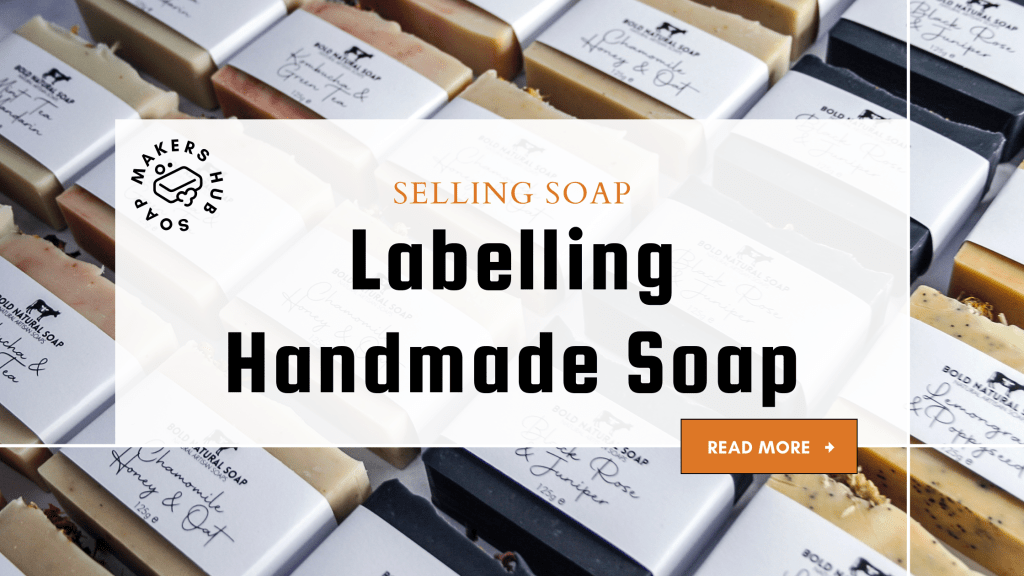
What Needs to Feature on Your Soap Labels (and Why It Matters)
Soap labels aren’t just about branding or aesthetics — they’re a legal requirement and a key part of selling soap responsibly. Clear, correct labelling protects both you and your customers and ensures your products meet cosmetic regulations.
This guide explains what must appear on a soap label, why each element matters, and common mistakes to avoid.
Why Soap Labelling Is Important
When you sell handmade soap, it is classed as a cosmetic product. That means it must comply with cosmetic regulations, including specific labelling requirements.
Correct labelling:
- Keeps you legally compliant
- Helps customers make informed choices
- Builds trust and professionalism
- Supports traceability and safety
Even if your soap is small-batch or handmade, the rules still apply.
What Must Appear on a Soap Label
1️⃣ Product Name or Description
Your label must clearly identify what the product is.
Examples:
- “Cold Process Soap”
- “Handmade Soap Bar”
- “Olive & Tallow Soap”
Avoid medical or treatment claims in the product name.
2️⃣ Net Weight of the Product
The weight must be shown in grams (g) and reflect the weight at the time of sale (after curing).
Example:
- Net Weight: 100g
This helps consumers understand what they’re purchasing and is a legal requirement.
3️⃣ Ingredient List (INCI Names)
Ingredients must be listed using INCI (International Nomenclature of Cosmetic Ingredients) names.
Key rules:
- List ingredients in descending order by weight at time of mixing
- Use INCI names only (not common or marketing names)
- Saponified oils are listed as their sodium salts
Example format:
Sodium Olivate, Sodium Tallowate, Sodium Cocoate, Sodium Castorate, Aqua, Glycerin
Accuracy is essential — this list must match your formulation.
4️⃣ Allergens (Where Required)
If your soap contains fragrance or essential oils, specific allergens must be declared when they exceed set thresholds.
These allergens are listed after the ingredient list, using their INCI names.
This is a common area where new sellers make mistakes.
5️⃣ Responsible Person Details
Your label must include the name and address of the Responsible Person — usually you or your business.
This must be:
- A physical postal address
- Located in the UK (for UK sales)
- Easy to read
A website or email alone is not sufficient.
6️⃣ Batch or Lot Number
Every soap must be traceable to a specific batch.
The batch number:
- Links the product to your batch records
- Allows you to identify affected products if issues arise
This can be:
- Printed
- Handwritten
- Stamped
As long as it’s clear and consistent.
Where This Information Needs to Appear
For soap sold loose or unpackaged:
- The information must be available on a swing tag, band, or point-of-sale display
For wrapped or boxed soap:
- All required information must be on the packaging
Nothing essential can be omitted for design reasons.
Common Soap Labelling Mistakes
- Using common ingredient names instead of INCI
- Missing batch numbers
- Forgetting net weight
- Making accidental cosmetic or medical claims
- Using phrases like “eczema soap” or “healing”
- Listing ingredients incorrectly
Most mistakes come from misunderstanding, not bad intent.
Claims vs Descriptions (Quick Reminder)
A description explains what the soap is.
A claim suggests what it does.
Keep wording factual and restrained:
- ✔ “Made with olive oil and tallow”
- ✖ “Soothes irritated skin”
When in doubt, simplify.
Labelling and Selling Soap
Correct labelling is not optional when selling soap — it’s part of professional practice.
Good labels:
- Support safety assessments
- Protect your business
- Build customer confidence
- Make scaling easier later on
If you plan to sell soap, it’s best to design labels correctly from the beginning.
Final Thoughts
Soap labels don’t need to be complicated — they need to be correct.
Clear, compliant labelling is one of the simplest ways to elevate your soap from hobby to professional product and avoid issues further down the line.
At The Soap Makers Hub, we believe good soap deserves clear information.
Coming Up Next
We’ll explore:
Building label templates that work long-term
Writing compliant product descriptions
Cosmetic claims vs marketing language
Common compliance mistakes new sellers make


 The Soap Makers Hub®
Leave a comment