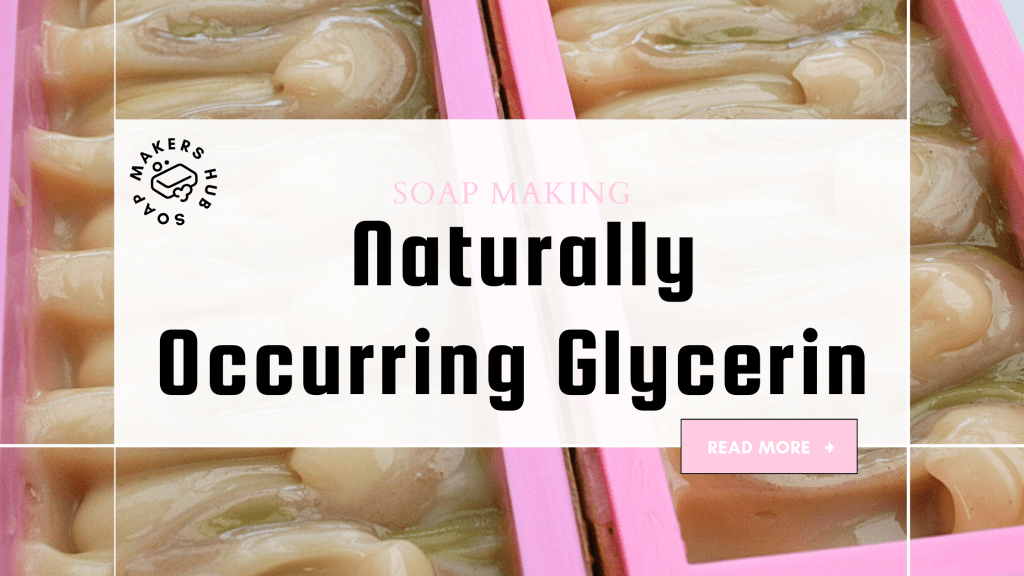
Understanding One of Soap’s Most Misunderstood Components
Glycerin is often marketed as an added benefit in skincare — but in true soapmaking, glycerin is already there.
It is not an ingredient you add.
It is a substance created during saponification.
Understanding glycerin — and choosing to retain it — is one of the clearest indicators that a soap maker understands their craft.
How Glycerin Is Created in Soap
During saponification, fats and oils react with an alkali to form:
- Soap
- Glycerin
This happens naturally in every properly made true soap.
In traditional, small-batch soapmaking, this glycerin remains within the soap — exactly where it belongs.
What Happens in Commercial Soap Production
In large-scale manufacturing, glycerin is often removed after saponification and sold separately for use in:
- Lotions
- Creams
- Serums
- Industrial applications
The remaining soap still cleans — but the balance is altered.
What’s left behind can feel:
- Drying
- Tight
- Overly stripping
Especially with frequent use.
Why Retaining Glycerin Matters
Glycerin is a humectant, meaning it attracts and holds moisture on the skin.
When naturally occurring glycerin is retained in soap, it helps to:
- Reduce post-wash dryness
- Support the skin barrier
- Improve comfort after rinsing
- Balance cleansing action
This is why well-formulated true soap can cleanse effectively without leaving skin feeling compromised.
Why We Don’t “Add Extra” Glycerin
In skilled soap formulation, adding glycerin back in is unnecessary.
When:
- Saponification is respected
- The fatty acid profile is balanced
- Superfatting is intentional
The soap already contains the glycerin it needs.
Adding more is often a correction for a formulation that has been stripped or pushed too far toward cleansing.
A Core Lesson for Soap Makers
Understanding glycerin retention teaches soap makers to:
- Respect the chemistry of soap
- Recognise the difference between true soap and detergent bars
- Evaluate claims critically
- Design formulas that work with the skin, not against it
This knowledge alone changes how you formulate forever.
Bringing It All Together
Full control over ingredients and retention of naturally occurring glycerin are not separate ideas — they are connected.
Both come from:
- Respecting the process
- Understanding the chemistry
- Making intentional choices
This is the heart of Soap Makers Hub.
Final Thoughts
Glycerin retention is a reminder that good soapmaking is not about adding more — it’s about removing less.
When you allow naturally occurring glycerin to remain in your soap, you respect the chemistry of the process and the needs of the skin. You stop fighting the nature of soap and start working with it.
For soap makers, understanding glycerin is often a quiet turning point. It deepens your appreciation for traditional methods and sharpens your ability to evaluate modern claims critically.
True soap, made well, already contains what it needs.
The skill lies in knowing when to leave it alone.



 The Soap Makers Hub®
Leave a comment